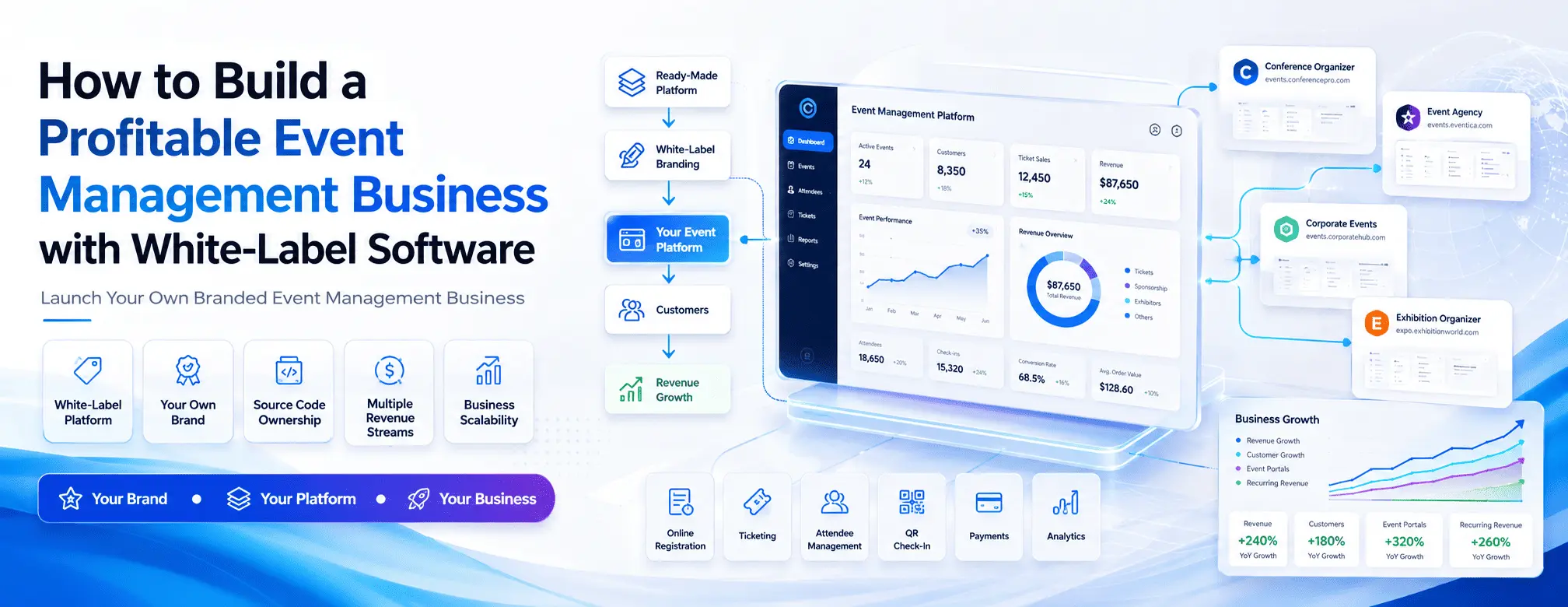
How to Build a Profitable Event Management Business with White-Label Software

MLGLOBTECH
Aug 20, 2026
The event industry is evolving rapidly. Event organizers, agencies, conference companies, exhibition businesses, and corporate event teams increasingly rely on technology to manage registrations, ticketing, attendees, payments, check-ins, and event operations.
For entrepreneurs, this growing demand creates an opportunity to build a profitable event management business without spending years developing software from scratch. A white-label event management platform allows businesses to launch their own branded software solution while using an already-developed technology infrastructure.
Instead of investing heavily in software development, businesses can focus on acquiring customers, building their brand, and expanding their event technology services.
What Is White-Label Event Management Software?
White-label event management software is a ready-made platform that businesses can brand and offer to their own customers under their company name.
Depending on the solution, businesses can customize elements such as:
Company branding and logo
Platform name and interface
Domain
Colors and visual identity
Event registration pages
Ticketing experience
Customer-facing communication
This makes the platform appear like proprietary software while reducing the time and resources required for development.
For businesses entering the event technology market, this approach can significantly reduce the barriers associated with launching a software product.
Why Start an Event Management Business?
The demand for digital event solutions continues to grow because modern events require more than basic registration.
Organizers need tools to manage the complete event lifecycle, including:
Online registration
Ticket sales
Attendee management
Speaker and agenda management
QR code check-in
Payment processing
Seat and table booking
Event analytics
Event communication
Reports and dashboards
Manually managing these activities can result in errors, delays, and unnecessary operational costs.
An event management platform brings these processes together, allowing organizers to manage events from a centralized system.
This creates an opportunity for entrepreneurs to provide technology solutions to event organizers while generating recurring business revenue.
Choose the Right White-Label Platform
The foundation of your business is the software you choose. Not every white-label platform provides the same features, flexibility, or ownership options.
Before selecting a solution, evaluate its capabilities carefully.
Look for important features such as online event registration, ticketing, attendee management, QR code check-in, payment gateway integration, interactive booking, reporting, and analytics.
Scalability is also important. Your platform should be capable of supporting different types and sizes of events.
If you plan to serve conferences, exhibitions, corporate events, seminars, concerts, or festivals, choose software that can accommodate different event formats.
Build Your Own Brand
One of the biggest advantages of white-label software is the ability to create a unique brand around the technology.
Instead of promoting another company's software, you can position yourself as an event technology provider.
Create a professional brand identity that includes:
Business name
Logo
Website
Brand colors
Product messaging
Pricing plans
Sales materials
Customer support channels
Your website should clearly explain how your platform helps event organizers save time, improve attendee experiences, and simplify event operations.
The goal is to sell the business solution, not simply the software features.
Define Your Target Market
A profitable event technology business needs a clearly defined target audience.
Instead of trying to sell to everyone, start with a specific market segment.
Potential customers include:
Event Organizers
Professional event organizers can use the platform to manage registrations, ticketing, attendees, and event operations.
Conference Companies
Conference organizers can manage speakers, agendas, registrations, tickets, and attendees through one platform.
Corporate Event Teams
Businesses organizing internal meetings, conferences, product launches, and corporate events can use digital event management tools to streamline operations.
Exhibition Organizers
Exhibition companies can benefit from registration, attendee management, booking, check-in, and reporting capabilities.
Event Management Agencies
Agencies can use white-label software to offer technology services to multiple clients under their own brand.
Understanding your target audience helps you create better marketing campaigns and pricing strategies.
Create Multiple Revenue Streams
A white-label event management business can generate revenue in several ways.
You could offer different subscription or licensing packages based on customer requirements.
For example:
Basic Plan: Suitable for small events and simple registration requirements.
Professional Plan: Includes advanced ticketing, attendee management, analytics, and integrations.
Enterprise Plan: Designed for large organizations requiring advanced customization, dedicated support, and extensive event management capabilities.
Additional revenue can come from:
Event setup services
Platform customization
Branding services
Technical support
Training
Data migration
Custom integrations
Premium features
The exact pricing model should depend on your target market and software ownership structure.
Focus on Customer Experience
Technology alone does not make an event management business profitable. Customer experience is equally important.
Your customers should be able to create events, configure registration, manage attendees, monitor reports, and perform check-ins without unnecessary complexity.
A simple interface can reduce training requirements and improve customer satisfaction.
You should also provide clear documentation, onboarding assistance, tutorials, and responsive support.
Satisfied customers are more likely to continue using your platform and recommend it to other organizers.
Use Digital Marketing to Generate Leads
Once your platform is ready, marketing becomes one of the most important parts of your business.
Create content that addresses the problems your target customers face.
For example, publish blogs about:
Event registration automation
Benefits of online ticketing
QR code event check-in
Event technology trends
How to reduce event management costs
Choosing event management software
White-label event management solutions
Search engine optimization can help attract potential customers who are actively looking for event software.
You can also use LinkedIn, email marketing, social media advertising, webinars, and direct outreach to reach event organizers and business decision-makers.
Offer Demonstrations
Event management software can contain many features, so potential customers may want to see the platform before purchasing.
Offer a free demo that demonstrates the most important workflows.
Show customers how they can:
Create an event
Set up registration
Sell tickets
Manage attendees
Configure seating
Scan QR codes during check-in
Monitor event performance
Generate reports
A practical demonstration can help prospects understand the platform's value much faster than a feature list.

Why Source Code Ownership Can Matter
For businesses building a long-term software business, ownership and control can be important considerations.
Some white-label solutions provide access to the platform's source code, allowing businesses greater control over customization, deployment, and future development.
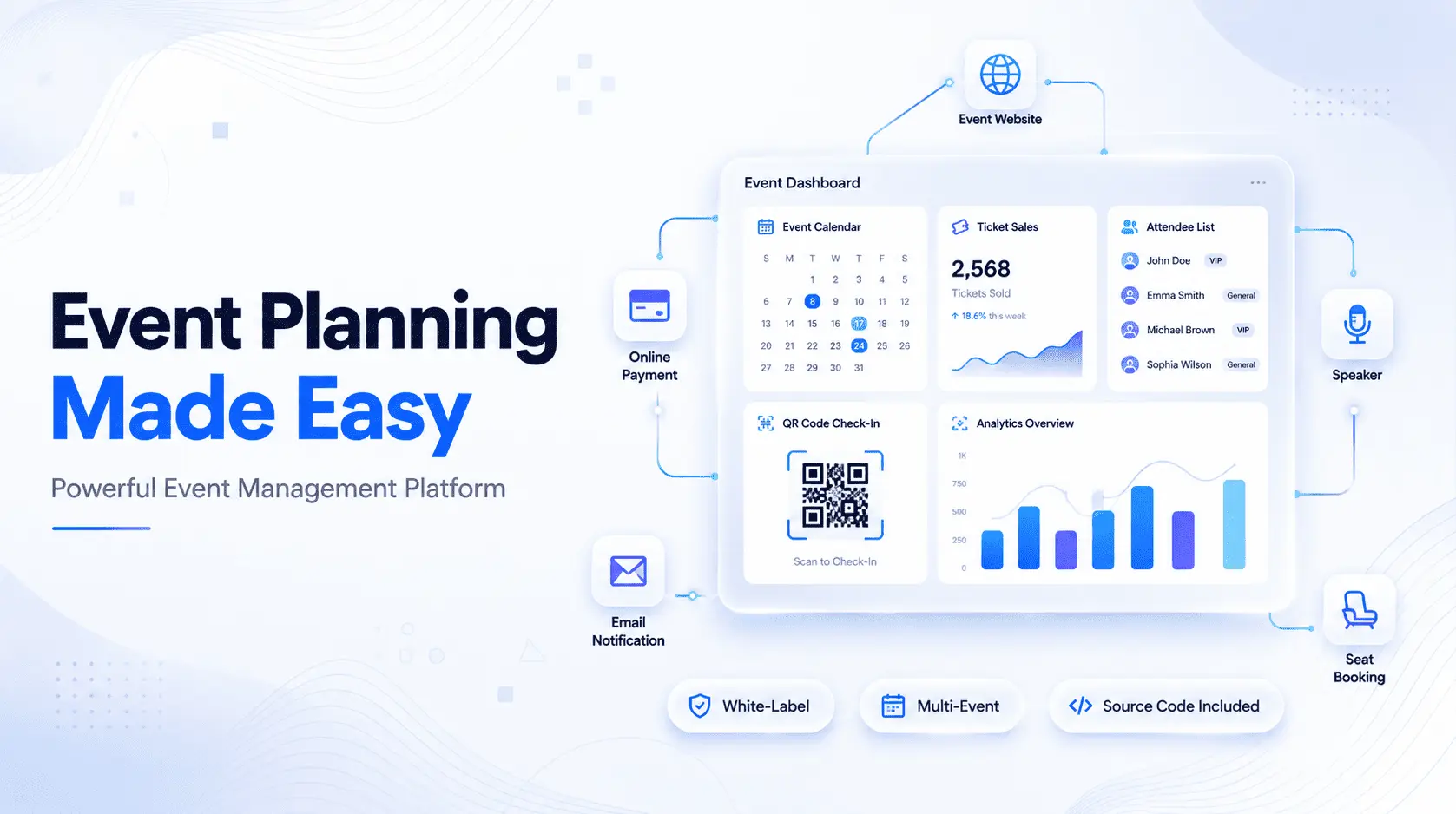
MLGLOBTECH Event Management Platform is designed for businesses looking to launch their own branded event technology solution, with features covering registration, ticketing, attendee management, QR check-in, payment integration, booking, analytics, and other event operations.
This type of solution can help entrepreneurs enter the event technology market without having to develop every core component from the beginning.
Scale Your Business
Once you acquire your first customers, focus on creating a repeatable sales and onboarding process.
You can expand by targeting additional industries and event types.
For example, you may initially focus on conference organizers and later expand into exhibitions, corporate events, seminars, festivals, and other large-scale events.
Partnerships can also accelerate growth. Consider working with event agencies, venues, ticketing companies, marketing agencies, and professional conference organizers.
As your customer base grows, continuously improve your platform and services based on customer feedback.
Conclusion
Building a profitable event management business does not necessarily require developing an entire software platform from the ground up. White-label event management software can provide the technology foundation needed to launch your own branded solution faster and with potentially lower development costs.
The key is to combine reliable technology with a strong brand, focused target market, effective marketing, excellent customer support, and a scalable business model.
Frequently Asked Questions (FAQs)
1. What is white-label event management software?
White-label event management software is a ready-made event technology platform that businesses can customize with their own branding and offer to customers as their own solution.
2. How can white-label software help build an event management business?
It reduces the need to develop software from scratch, allowing businesses to launch their branded event management solution faster and focus on sales, marketing, customer acquisition, and business growth.
3. What features should an event management platform include?
Important features include online registration, ticketing, attendee management, QR code check-in, payment gateway integration, seat and table booking, event analytics, reporting, and event communication.
4. Can I offer white-label event management software to multiple clients?
Yes. A white-label platform can allow you to serve multiple event organizers under your own brand, depending on the platform's licensing and deployment model.
5. Is white-label event management software profitable?
Yes, it can be a profitable business model when combined with the right target market, pricing strategy, marketing, customer support, and value-added services such as customization, implementation, and technical support.