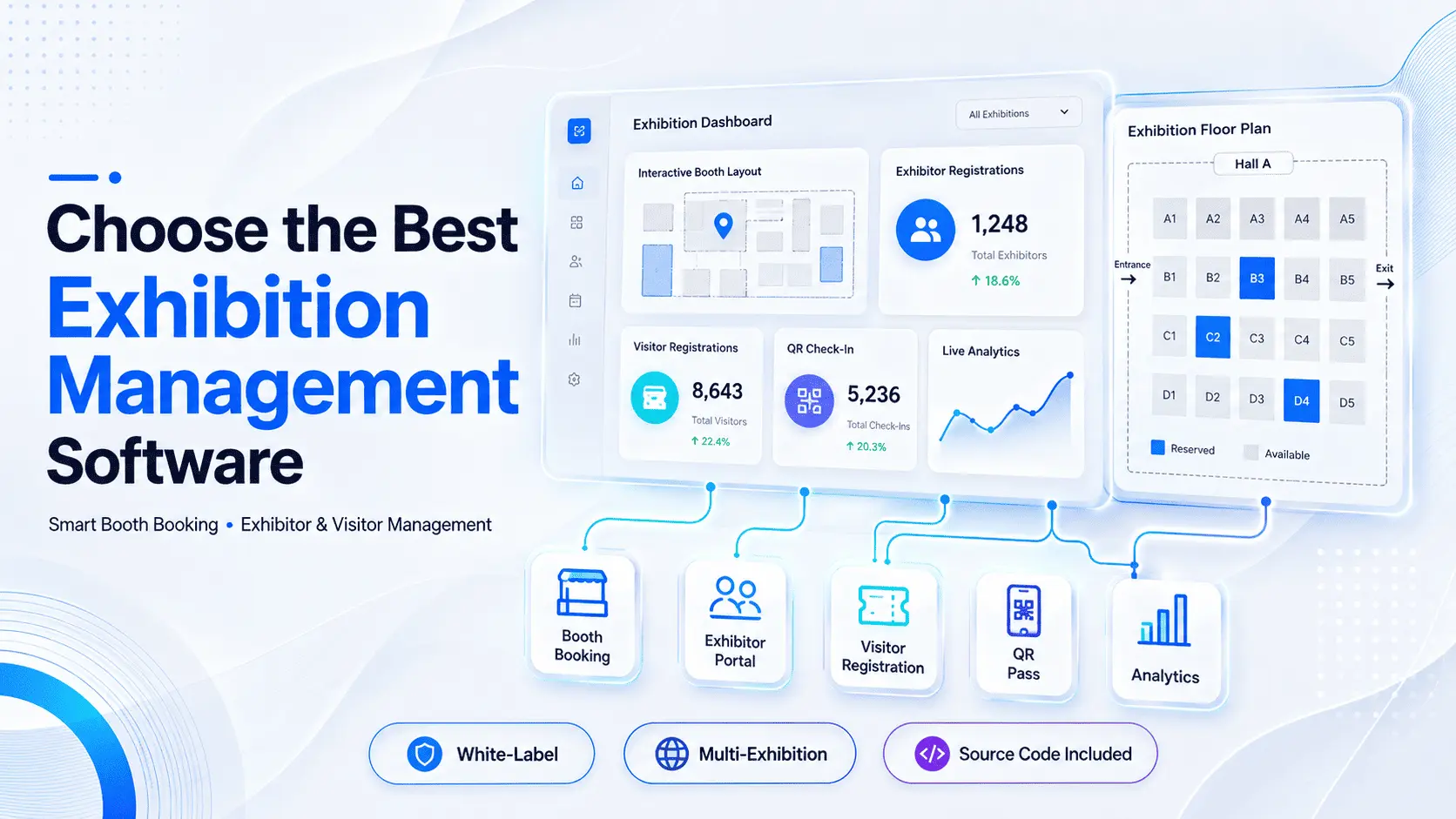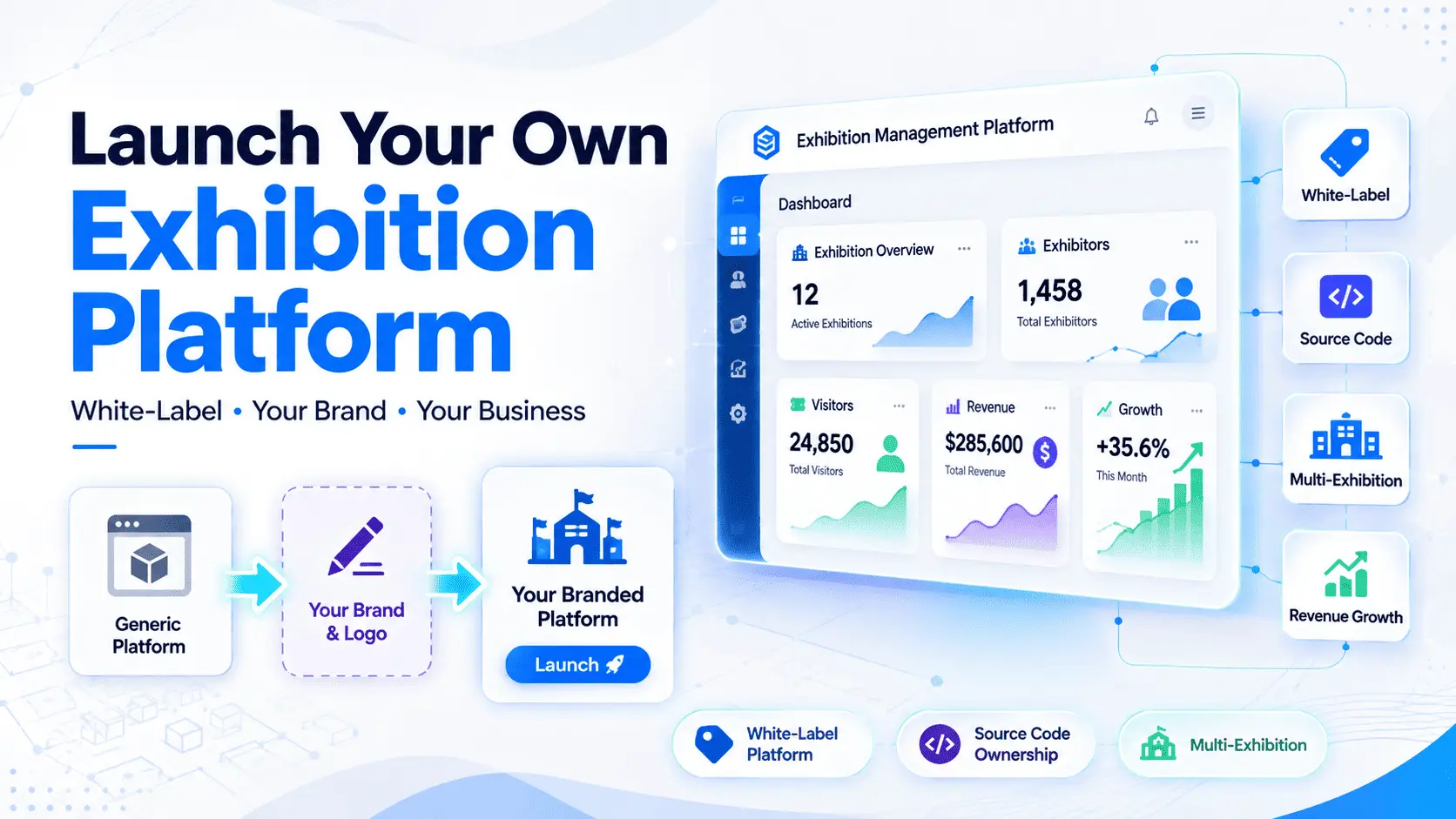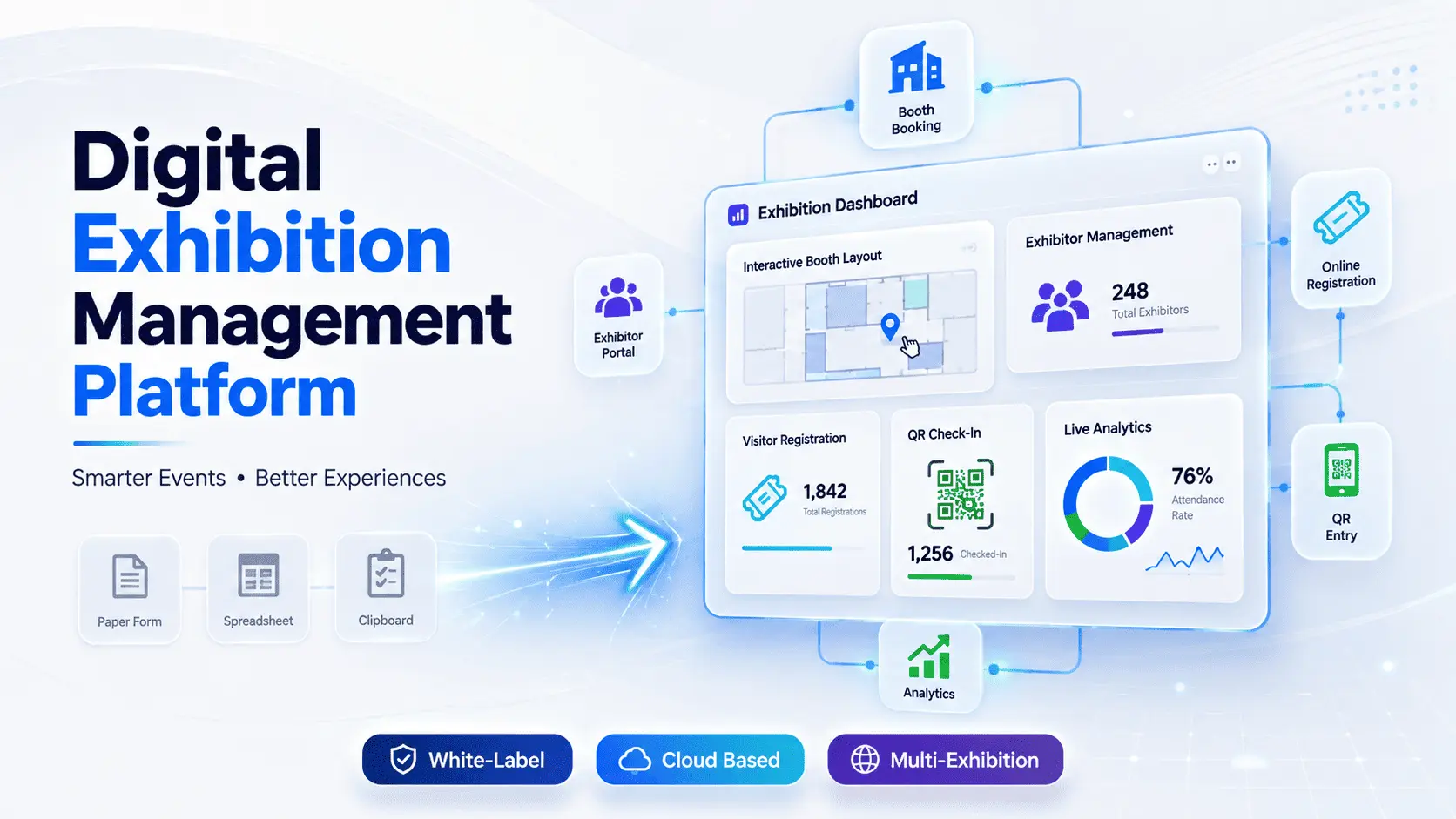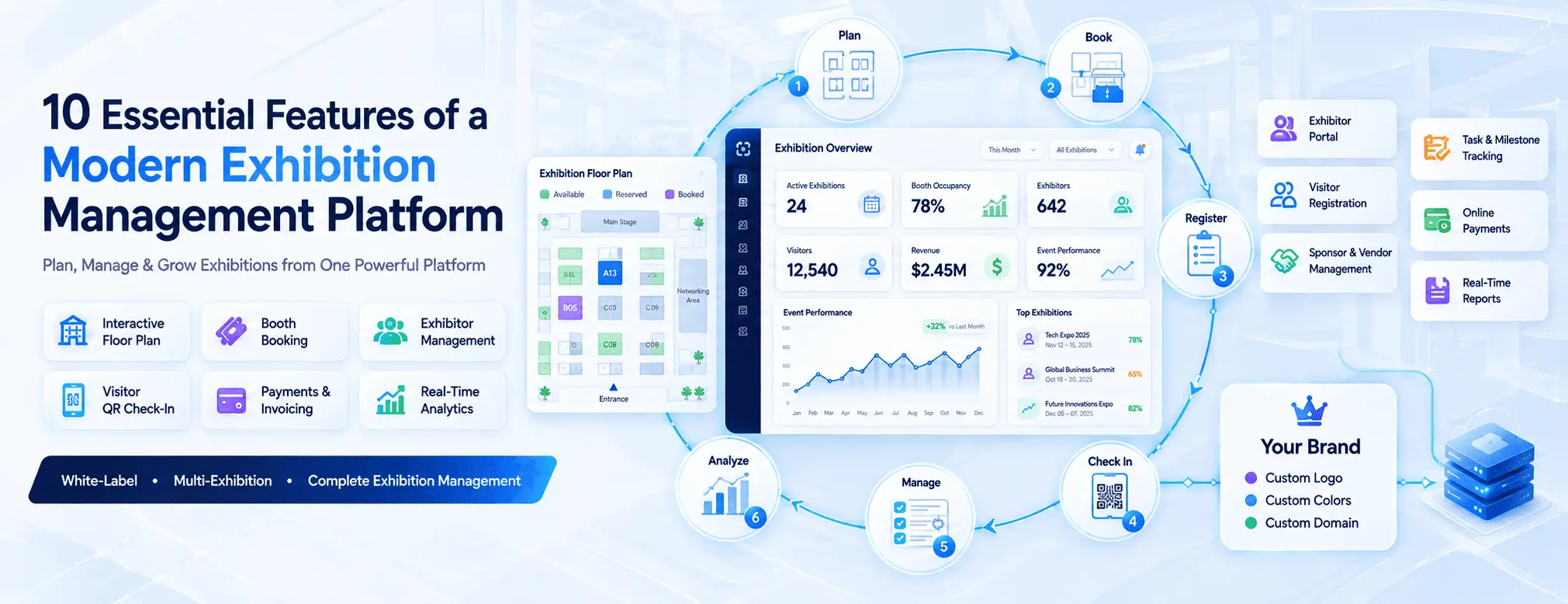
10 Essential Features of a Modern Exhibition Management Platform

MLGLOBTECH
Aug 17, 2026
Exhibitions, trade shows, expos, and business events involve hundreds or even thousands of moving parts. From exhibitor registration and booth allocation to visitor check-in, payments, sponsorships, and post-event reporting, managing everything manually can quickly become complicated.
A modern Exhibition Management Platform brings these activities together in one centralized system. It helps organizers reduce administrative work, improve exhibitor and visitor experiences, increase revenue, and make better decisions using real-time data.
Today, platforms such as MLGLOBTECH Exhibition & Expo Management Platform provide comprehensive tools for managing exhibitions, trade shows, conferences, and events from a single solution.
Here are 10 essential features every modern exhibition management platform should offer.
1. Interactive Floor Plan and Booth Designer
One of the most important features of exhibition management software is an interactive floor plan.
Traditional booth allocation often relies on spreadsheets, static maps, emails, and manual updates. This can result in double bookings, incorrect booth information, and unnecessary administrative work.
An interactive floor plan allows organizers to visually design exhibition spaces using a drag-and-drop interface. Exhibitors can view available booths, compare locations and pricing, and select their preferred space online.
A modern platform can also display real-time booth availability and color-coded booking statuses, making space management significantly easier.
2. Online Booth Booking and Reservation
Modern exhibitors expect convenient online booking instead of lengthy email conversations.
An online booth booking system allows exhibitors to:
Browse available exhibition spaces
View booth sizes and locations
Compare pricing
Select preferred booths
Add additional services
Make online payments
Receive instant confirmation and invoices
This self-service approach reduces manual work for organizers while making the booking experience faster for exhibitors. It can also help organizers improve booth occupancy and revenue.
3. Exhibitor Registration and Management
Exhibitors are at the center of most trade shows and exhibitions, so managing their information efficiently is essential.
A modern platform should provide online exhibitor registration where companies can submit applications, create profiles, upload information, manage staff, select booths, and track payments.
Organizers should also be able to manage exhibitor approvals, booth assignments, invoices, documents, products, and communications from a centralized dashboard.
This creates a more organized exhibitor experience while giving organizers better visibility into every participating company.
4. Visitor Registration and Digital Badge Management
Visitor registration is another essential component of a successful exhibition.
Instead of relying on paper forms or manual registration desks, organizers can provide online registration forms where visitors submit their information before the event.
The platform can then generate digital tickets, QR passes, or visitor badges. This makes the registration process faster and provides organizers with valuable attendee information.
A centralized visitor management system can also support attendance tracking, visitor analytics, automated notifications, and post-event engagement.
5. QR Code Check-In
Long queues at exhibition entrances can create a poor first impression.
QR code check-in helps solve this problem by allowing staff to scan digital visitor passes and verify registrations quickly.
A visitor can register online, receive a QR code, and present it at the venue. Staff can scan the code to confirm registration and record attendance.
This creates a faster entry process while giving organizers real-time visibility into attendance numbers.
6. Secure Payments and Automated Invoicing
Exhibitions involve numerous financial transactions, including booth bookings, visitor tickets, sponsorship packages, additional facilities, and exhibitor services.
A modern platform should integrate online payment processing and automated invoicing into the booking workflow.
Instead of manually preparing invoices and tracking payments, organizers can automate processes such as:
Online payments
Invoice generation
Receipts
Tax calculations
Refund tracking
Payment records
Financial reporting
MLGLOBTECH's platform, for example, supports online payments, automated invoices, and financial management capabilities as part of its exhibition solution.
7. Sponsor, Vendor, and Service Management
Large exhibitions often involve sponsors, contractors, vendors, and multiple service providers.
Managing these relationships through spreadsheets and separate communication channels can become difficult.
A modern exhibition management platform should provide centralized vendor and sponsor management. Organizers can manage registrations, contracts, sponsorship packages, service requirements, payments, and performance information.
The platform can also support additional exhibition services such as electricity, internet, furniture, storage, parking, branding, and audio/video equipment.
This can create additional revenue opportunities while simplifying service management.
8. Task and Milestone Management
Successful exhibitions require careful planning long before the event begins.
Organizers need to coordinate venue preparation, marketing, exhibitor onboarding, booth setup, vendor activities, staff assignments, registration, and many other tasks.
A task and milestone management feature helps teams organize this work in one place.
Organizers can:
Create exhibition milestones
Assign tasks to team members
Set deadlines and priorities
Monitor task progress
Track completion
Identify delays
This improves team collaboration and helps ensure important activities are completed on schedule.
9. Real-Time Analytics and Reporting
Data is one of the most valuable assets for exhibition organizers.
Without accurate reporting, it can be difficult to understand how an exhibition is performing.
A modern platform should provide real-time dashboards covering important metrics such as:
Booth occupancy
Exhibitor performance
Visitor registrations
Attendance
Ticket sales
Sponsorship revenue
Payments
Exhibition KPIs
Real-time analytics allow organizers to identify trends, monitor performance, and make informed decisions during and after an event.
Detailed reports can also help organizers demonstrate event ROI to sponsors, exhibitors, and business stakeholders.
10. White-Label and Scalable Architecture
For exhibition companies and businesses looking to build their own software platform, white-label functionality can be a major advantage.
A white-label exhibition management platform allows a business to launch the solution under its own brand, domain, design, and identity.
For example, MLGLOBTECH offers a white-label, self-hosted Exhibition Management Platform with source code ownership. It supports multi-tenant management, allowing multiple organizers to operate through dedicated branded portals from one system.
This can be particularly valuable for:
Exhibition management companies
Event technology companies
Convention centers
Trade show organizers
Software resellers
Businesses launching SaaS platforms
Scalability is equally important. As the number of exhibitions, organizers, exhibitors, and visitors grows, the platform should be able to support expanding operations without requiring a complete technology replacement.

Why These Features Matter
A modern exhibition management platform is more than a registration system. It acts as a centralized digital infrastructure for the entire exhibition lifecycle.
By combining booth booking, floor planning, exhibitor management, visitor registration, QR check-in, payments, vendor management, task management, and analytics, organizers can reduce manual processes and create a smoother experience for every stakeholder.
For businesses that want greater control over their technology, a white-label and self-hosted solution can provide additional flexibility. MLGLOBTECH platform is designed around this model, offering source code ownership, customizable branding, multi-organizer capabilities, and a one-time purchase approach.
Conclusion
The success of an exhibition depends not only on the event itself but also on how efficiently the entire operation is managed.
The 10 essential features of a modern Exhibition Management Platform include interactive floor planning, online booth booking, exhibitor management, visitor registration, QR code check-in, secure payments, sponsor and vendor management, task management, real-time analytics, and white-label scalability.
Frequently Asked Questions (FAQs)
1. What is an Exhibition Management Platform?
An Exhibition Management Platform is a centralized software solution that helps organizers manage the complete exhibition lifecycle. It can include exhibitor registration, booth booking, interactive floor plans, visitor registration, QR check-in, payments, vendor management, and real-time analytics.
2. What are the key features of an Exhibition Management Platform?
Key features typically include interactive floor plans, online booth booking, exhibitor management, visitor registration, QR code check-in, payment integration, sponsor and vendor management, task management, reporting, and analytics.
3. How does exhibition management software benefit organizers?
It helps organizers automate repetitive tasks, reduce manual work, manage exhibitors and visitors efficiently, simplify booth allocation, track payments, and access real-time event data. This can improve operational efficiency and the overall exhibition experience.
4. Can an Exhibition Management Platform be white-labeled?
Yes. A white-label Exhibition Management Platform can be customized with a company's own branding, domain, logo, colors, and other business requirements. This allows event companies and technology providers to offer the platform under their own brand.
5. Is MLGLOBTECH's Exhibition Management Platform suitable for multiple exhibitions?
Yes. MLGLOBTECH's Exhibition Management Platform is designed to support multiple exhibitions and organizers through centralized management capabilities. It offers features such as multi-tenant management, booth booking, exhibitor management, visitor registration, analytics, and white-label branding.