Why Businesses Are Switching to Digital Exhibition Management Platforms

MLGLOBTECH
Aug 7, 2026
Exhibitions and trade shows continue to be one of the most effective ways for businesses to showcase products, connect with potential customers, generate qualified leads, and strengthen brand visibility. However, organizing successful exhibitions has become increasingly complex. Event organizers must coordinate registrations, exhibitors, booth allocations, ticketing, sponsors, payments, visitor engagement, and post-event reporting—all while ensuring a seamless experience for everyone involved.
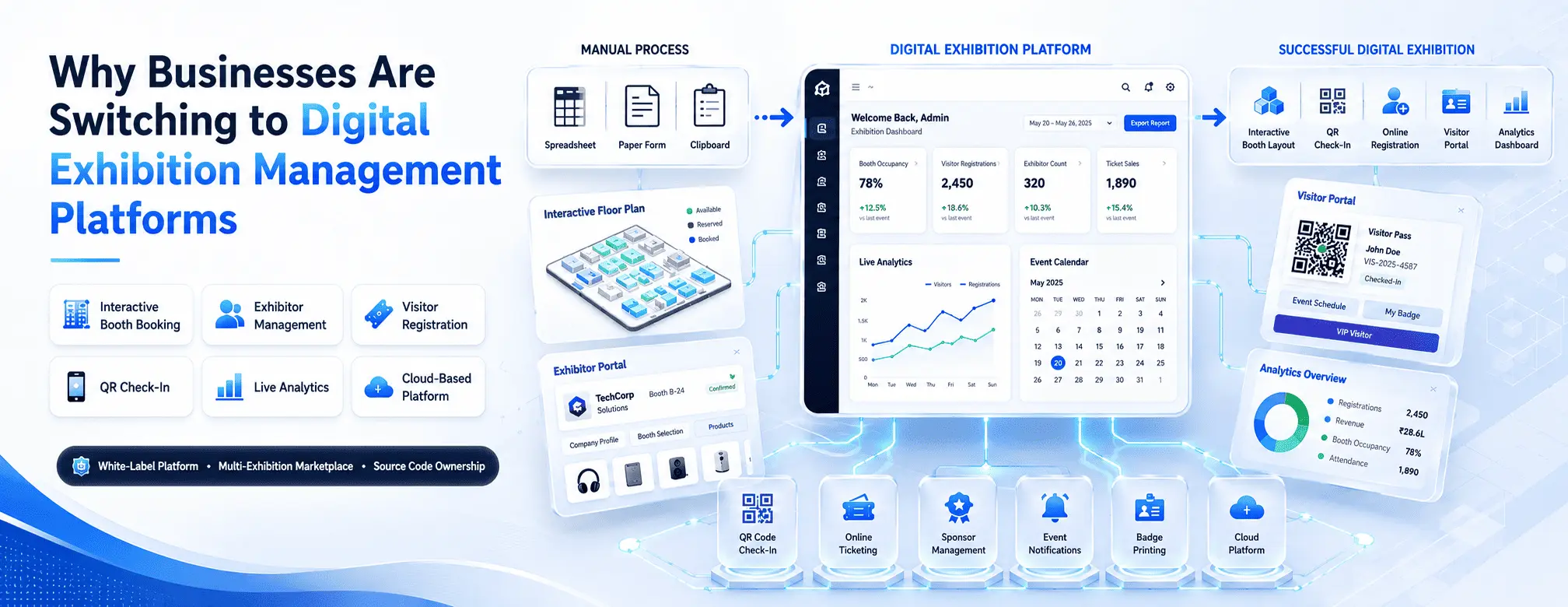
Traditional methods that rely on spreadsheets, paper forms, and multiple disconnected tools often result in inefficiencies, delays, and costly mistakes. As a result, organizations worldwide are embracing Digital Exhibition Management Platforms to automate operations, improve productivity, and deliver exceptional event experiences.
In this article, we'll explore why businesses are switching to digital exhibition management platforms, the benefits they offer, and the key features to look for when choosing the right solution.
What Is a Digital Exhibition Management Platform?
A Digital Exhibition Management Platform is an all-in-one software solution that helps businesses plan, organize, manage, and analyze exhibitions, trade shows, expos, and conferences through a centralized system.
Instead of handling multiple processes manually, organizers can manage everything from one dashboard, including:
Online exhibitor registration
Visitor registration
Booth booking and floor plan management
Online ticketing
QR code check-ins
Payment processing
Sponsor management
Event scheduling
Analytics and reporting
These platforms simplify event management while providing a better experience for exhibitors, visitors, sponsors, and organizers.
Why Traditional Exhibition Management No Longer Works
Many event organizers still rely on spreadsheets, email chains, and paper-based workflows. While these methods may work for small events, they become difficult to manage as exhibitions grow.
Some common challenges include:
Manual data entry errors
Double booth bookings
Long registration queues
Delayed communication
Difficult payment tracking
Limited reporting capabilities
Poor attendee experience
Digital platforms eliminate these challenges by automating repetitive tasks and providing real-time visibility into every aspect of the event.
Key Reasons Businesses Are Switching to Digital Exhibition Management Platforms
1. Faster and Smarter Event Planning
Planning an exhibition involves coordinating hundreds or even thousands of participants.
Digital platforms help organizers:
Create events quickly
Manage multiple exhibitions
Track event progress
Assign team responsibilities
Monitor deadlines
Automation reduces planning time and minimizes human error.
2. Simplified Online Registration
Modern attendees expect quick and convenient online registration.
A digital platform enables:
Visitor registration
Exhibitor registration
Speaker registration
VIP registrations
Custom registration forms
Automated confirmations and digital tickets improve the registration experience while reducing administrative workload.
3. Interactive Booth Booking
One of the biggest advantages of digital exhibition software is interactive booth management.
Instead of manually assigning booths, exhibitors can:
View live floor plans
Check booth availability
Select preferred locations
Complete online payments
Receive instant confirmations
This creates a smoother experience for exhibitors while reducing organizer workload.
4. Better Visitor Experience
Attendee satisfaction directly impacts the success of an exhibition.
Digital platforms enhance visitor experiences through:
Mobile-friendly registration
QR code tickets
Fast check-in
Live event schedules
Personalized notifications
Digital badges
Shorter queues and smoother entry improve first impressions and increase engagement.
5. Efficient Exhibitor Management
Managing dozens or hundreds of exhibitors manually is time-consuming.
A digital exhibitor portal allows businesses to:
Update company profiles
Upload product catalogs
Register booth staff
Download invoices
Access event information
Collect visitor leads
This self-service approach saves time for both organizers and exhibitors.
6. Secure Online Payments
Digital exhibition platforms integrate with trusted payment gateways to support:
Ticket sales
Booth bookings
Sponsorship payments
Additional services
Automated invoices and payment tracking reduce financial errors and improve transparency.
7. QR Code Check-In
Traditional check-in methods often lead to long waiting lines.
QR code technology allows organizers to:
Scan tickets instantly
Print badges quickly
Verify attendees
Track attendance in real time
This improves security while delivering a faster and more professional event experience.
8. Real-Time Analytics and Reporting
Data is one of the biggest advantages of digital event management.
Built-in dashboards provide valuable insights such as:
Registration numbers
Ticket sales
Revenue reports
Booth occupancy
Visitor demographics
Sponsor performance
Attendance trends
These insights help organizers make informed decisions and improve future events.
9. Improved Team Collaboration
Large exhibitions involve multiple departments and stakeholders.
Cloud-based platforms allow teams to:
Access the same data
Share updates instantly
Assign tasks
Track progress
Collaborate remotely
This improves coordination and reduces communication gaps.
10. Increased Revenue Opportunities
Digital platforms help businesses maximize event profitability by enabling:
Online ticket sales
Premium booth pricing
Sponsorship packages
Advertising opportunities
Upselling event services
Automated sales processes also reduce administrative costs.
Essential Features of a Digital Exhibition Management Platform
When selecting software, look for features such as:
Online visitor registration
Exhibitor management
Interactive booth booking
Floor plan management
QR code check-in
Online ticketing
Payment gateway integration
Sponsor management
Event scheduling
Email and SMS notifications
Badge generation
Mobile accessibility
Analytics and reporting
Multi-event management
White-label branding
These capabilities ensure efficient operations and a professional experience.
Benefits of Cloud-Based Exhibition Management Software
Cloud technology has transformed how businesses manage events.
Scalability
Handle everything from small exhibitions to international trade shows without changing systems.
Remote Access
Manage events anytime, anywhere using a web browser or mobile device.
Automatic Updates
Receive new features and security improvements without manual installations.
Better Security
Cloud platforms use encryption, secure backups, and access controls to protect sensitive event data.
Lower IT Costs
No need to invest in expensive servers or complex infrastructure.
How Digital Platforms Improve ROI
A successful exhibition is measured by attendee satisfaction, exhibitor success, and business outcomes.
Digital exhibition management platforms contribute to higher ROI by:
Reducing manual work
Increasing registration conversions
Improving exhibitor satisfaction
Enhancing visitor engagement
Reducing operational costs
Providing actionable insights
Supporting faster decision-making
By automating routine tasks, organizers can focus on delivering memorable event experiences that drive long-term business growth.
Choosing the Right Exhibition Management Platform
Before selecting a solution, consider these factors:
Ease of use
Scalability
Customization options
White-label capabilities
Mobile compatibility
Integration with CRM, ERP, and payment gateways
Security features
Reporting and analytics
Customer support
Pricing model
Choosing a platform that aligns with your business goals ensures long-term value and operational efficiency.
Conclusion
The shift toward Digital Exhibition Management Platforms is transforming how businesses organize exhibitions, trade shows, and conferences. By replacing manual processes with automation, organizations can streamline registrations, simplify booth management, enhance visitor experiences, improve collaboration, and gain valuable insights through real-time analytics.
If you're looking for a scalable and customizable solution, MLGLOBTECH Exhibition Management Platform offers end-to-end capabilities including online registration, interactive booth booking, QR code check-ins, exhibitor management, payment integration, sponsor management, and comprehensive reporting—helping you run smarter and more successful exhibitions.
Frequently Asked Questions (FAQs)
1. What is a Digital Exhibition Management Platform?
A Digital Exhibition Management Platform is software that helps organizers manage registrations, booth bookings, ticketing, exhibitors, sponsors, payments, check-ins, and event analytics from one centralized system.
2. Why are businesses adopting digital exhibition management solutions?
Businesses adopt these platforms to automate workflows, reduce manual errors, improve attendee experiences, streamline exhibitor management, and access real-time reporting for better decision-making.
3. What features should an exhibition management platform include?
Key features include online registration, interactive booth booking, QR code check-ins, ticketing, payment gateway integration, exhibitor and sponsor management, event scheduling, analytics, and mobile accessibility.
4. How does digital exhibition software improve event ROI?
It reduces operational costs, automates repetitive tasks, increases registration efficiency, enhances attendee engagement, improves exhibitor satisfaction, and provides data-driven insights to optimize future events.
5. Is cloud-based exhibition management software suitable for large events?
Yes. Cloud-based platforms are highly scalable, secure, and accessible from anywhere, making them ideal for managing exhibitions, trade shows, conferences, and expos of any size.